

Autumn Entertaining with Antiques: How to Create a Warm, Characterful Dining Space
Autumn Entertaining with Antiques: How to Create a Warm, Characterful Dining Space
Autumn changes the way we use our homes. Evenings arrive earlier, meals move back indoors and the dining table becomes somewhere to linger rather than simply somewhere to eat. It is also a season that suits antique and vintage interiors particularly well: warm timber, aged brass, old glass, ceramics and gently worn surfaces all bring depth without the need to redecorate the room for a few weeks of the year.
At The Past & The Curious, we think the most successful seasonal interiors are built around pieces worth living with all year. Instead of filling a room with temporary autumn decorations, start with furniture and objects that already have warmth, texture and character, then use flowers, foliage, fruit, candles and table linen to reflect the season.
For autumn entertaining, this approach is both more practical and more personal. An antique dining table can become the centre of the evening, a sideboard can take pressure off the table, a pair of lamps can soften the room and a mixture of old serving pieces can make even a simple supper feel considered.
Start with the table, not the decorations
The dining table does more than hold plates. Its size, shape, material and position determine how comfortable the room feels and how easily people can move around it.
Before adding any seasonal styling, make sure the table works for the number of people you are likely to seat. A round table can be particularly sociable because everyone faces towards the centre, while a rectangular table often makes better use of a longer room. An extending antique table gives you flexibility without leaving a large piece permanently occupying the space.
Think about circulation as well as capacity. Chairs need room to pull back, people need to pass behind them and serving food becomes awkward if every available inch is filled. A slightly smaller table with comfortable movement around it will usually work better than squeezing the largest possible table into the room.
And do not automatically cover an old table simply because autumn has arrived. Darker oak, mahogany, walnut and aged pine already provide the rich, warm tones associated with the season. A runner, individual mats or a few carefully placed serving pieces can add softness while still allowing the character of the timber to be seen.
Mix antique dining chairs with confidence
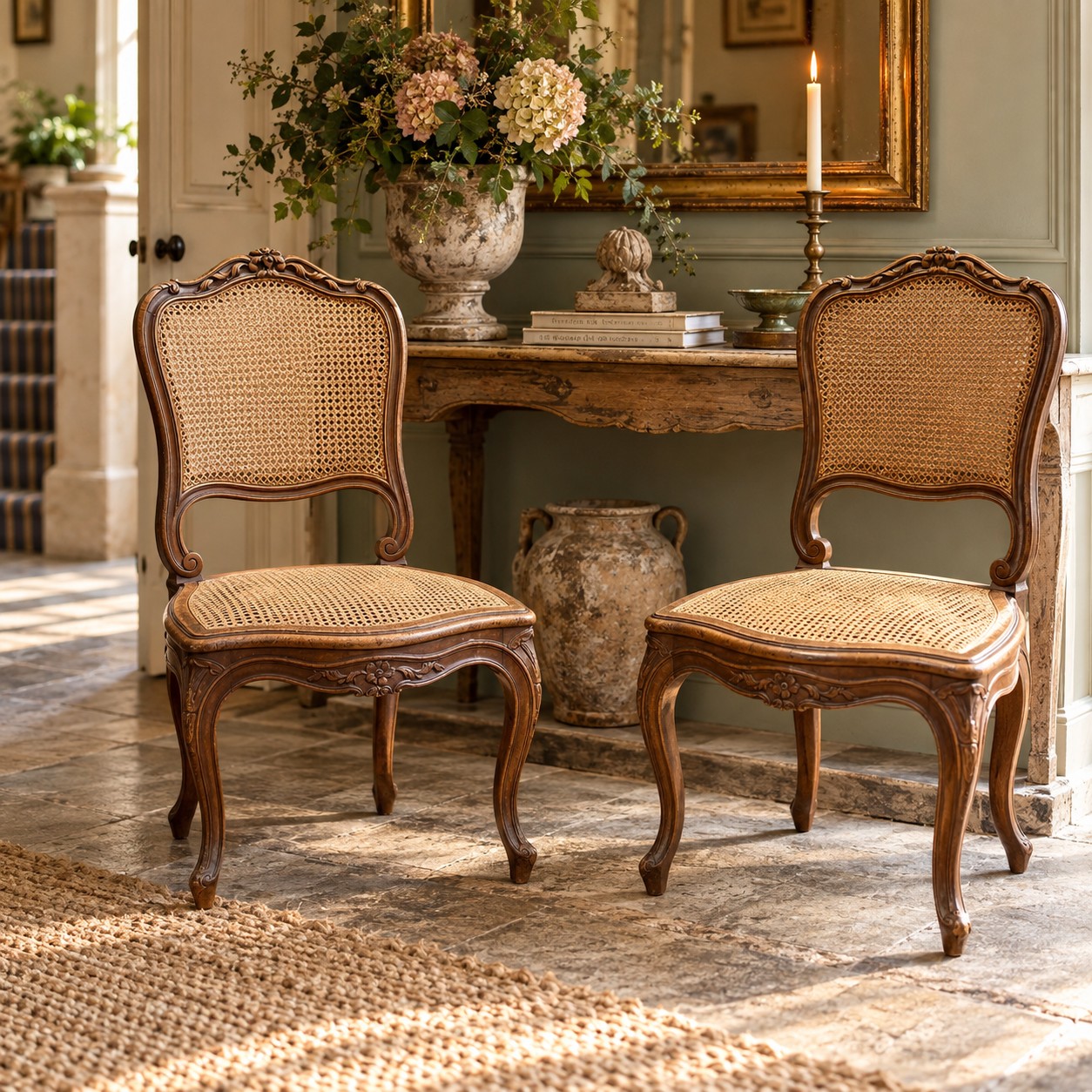
A dining room does not need a perfectly matching suite to feel coherent. In fact, a mixture of antique and vintage chairs can make the room feel far more relaxed and collected, provided there is something that connects them.
The practical point to check first is seat height. Chairs can look wonderfully different but still need to place diners at roughly the same comfortable height in relation to the tabletop. Width matters too, especially if several chairs need to sit between table legs or around a compact table.
Visually, look for one repeated element. It might be a similar timber tone, black-painted frames, rush seats, turned legs or upholstery in related colours. Another simple approach is to use a matching pair of more substantial chairs at the ends of a rectangular table and mix quieter chairs along the sides.
This lets the room feel assembled over time without becoming chaotic. It also means you can buy good individual chairs when you find them rather than waiting for a complete set that may never be quite right for your space.
Make the sideboard earn its place
A sideboard, dresser or console can completely change the way a dining room works when people come over. Instead of treating it as somewhere to display decorative objects, use it as working furniture.
Before guests arrive, clear enough surface for a drinks station, water jugs, spare glasses or serving dishes. During the meal it can hold plates that have finished their job on the table, keeping the dining surface from becoming overcrowded. Drawers and cupboards can store table linen, candles, cutlery or serving pieces so the things you need are already in the room.
A sideboard is also an ideal place for a pair of lamps. Because the light sits below eye level and away from the centre of the table, it can soften the room without dazzling diners. Add one or two decorative objects rather than filling every inch and the piece remains both useful and attractive.
Layer the lighting for an autumn evening
Lighting matters more as daylight disappears earlier, but a cosy dining room should not simply be a brightly lit room. The most inviting spaces usually combine several smaller sources of light rather than relying entirely on one overhead fitting.
Use the ceiling light when you need it, but bring in lower pools of light through table lamps, wall lights or floor lamps around the edges of the room. Candles can then add warmth at table level. The result is a room with brighter and darker areas, which feels naturally softer than uniform illumination.
If you already own vintage lighting, autumn is a good time to reconsider where it lives. A lamp that felt unnecessary beside a sideboard in July may become one of the most useful pieces in the room by September. Our separate guide to buying vintage lighting covers the practical considerations in more detail, while here the important point is simply to use light at different heights.
Style the table with pieces worth owning all year
Seasonal styling does not have to mean buying a new collection of decorations every autumn. Vintage and antique homewares can create the atmosphere while remaining useful long after the leaves have gone.
Brass candlesticks, old wooden boards, ceramic jugs, bowls, silverplate, etched glassware, serving trays and interesting bottles all work beautifully at this time of year because their materials already have visual warmth. They also mix easily with modern plates and everyday glassware, so there is no need to build a complete period table setting.
For seasonal colour, let nature do more of the work. Hydrangeas, seed heads, branches, apples, pears and autumn foliage can bring reds, greens, browns and muted golds without making the room feel themed. The English Home’s autumn entertaining guide is a useful source of further inspiration for using natural textures, produce and seasonal arrangements.
Build a table that still works for dinner
A beautiful table is not successful if nobody has room to eat from it. The centre of the table should support the meal rather than compete with it.
Keep most arrangements low enough that people can see and talk across them. If you want height, use a few narrow candlesticks or a taller arrangement that can easily be moved once everyone sits down. Leave clear areas for serving dishes, wine bottles, water and the things that inevitably arrive after the photographs have been taken.
Repetition is often more effective than quantity. Two or three materials – perhaps old glass, brass and dark wood – will create a stronger look than lots of unrelated decorative pieces. The same applies to colour: choose a restrained palette and allow the food, foliage and candlelight to provide the variation.
The English Home’s current autumn tablescape ideas show how seasonal produce, natural textures and tableware can create atmosphere without requiring an elaborate permanent display.
Protect antique furniture while actually using it
Owning an antique dining table should not mean being afraid to eat at it. Good furniture was made to be used, and sensible everyday protection allows it to remain part of family life and entertaining.
Use trivets or heatproof mats beneath hot serving dishes. Coasters and placemats are useful where glasses or plates are likely to sit for a long time. If something spills, deal with it promptly rather than allowing liquid to remain on a polished surface.
Take particular care with flower arrangements. The National Trust’s conservation guidance notes that even small amounts of liquid can stain wood and recommends waterproof protection beneath plants and vases. That is an easy habit to adopt at home: use a discreet waterproof mat, saucer or tray beneath any arrangement containing water.
Candles also need a stable holder and enough clearance from foliage, fabrics and other objects. The aim is not to make the table precious; it is to remove the obvious risks so you can relax and use it normally.
Mix old and new for a room that feels collected
One of the easiest mistakes when introducing antiques is assuming every element needs to belong to the same era. A room often feels more natural when older pieces are allowed to sit beside contemporary ones.
An antique dining table can work beneath a modern pendant. Vintage chairs can surround a newer table. An old sideboard can sit beneath contemporary artwork. Antique candlesticks can be used with simple modern crockery. These contrasts stop the room becoming a period set and make individual pieces easier to appreciate.
If the mix feels disconnected, repeat a material or colour elsewhere. The brass in a candlestick might be echoed by a lamp. A dark wood chair might relate to a picture frame. Linen napkins can soften harder materials. Small connections are usually enough to make very different objects feel intentional.
Let the room carry you through winter
The advantage of building an autumn dining room around real furniture and useful objects is that very little has to change when the season moves on.
For Bonfire Night, add deeper candlelight and simple seasonal food. As winter arrives, replace autumn foliage with evergreen branches or winter flowers. At Christmas, the same table, sideboard, glassware, candlesticks and lighting can form the foundation of a more celebratory room.
This is a more sustainable and more individual way to decorate than replacing seasonal accessories every few months. The room evolves, but the pieces with genuine character remain.
Find antique and vintage pieces for autumn entertaining
At The Past & The Curious, our collection changes constantly and includes antique and vintage furniture, lighting, homewares and decorative pieces that can make a dining space feel more personal.
Whether you are looking for a dining table with years of character, an unusual chair, a practical sideboard, vintage glassware, candlesticks or a lamp to warm a darker corner, buying older pieces allows you to build a room gradually rather than furnishing it all at once.
Browse our latest stock online or make an appointment to view pieces in person. The best autumn dining rooms are not the ones that look newly decorated for the season, but the ones that feel comfortable, useful and collected enough to make people want to stay at the table a little longer.
Explore our antique and vintage furniture, discover our vintage lighting and decorative antiques, or make an appointment to view one-off pieces in person.





